

Masking Tape
Masking tape is a lightweight adhesive tape designed for temporary use during painting and marking tasks. It peels away cleanly without leaving residue, making it ideal for paint and bodywork. Available in various widths, it provides flexibility for different applications. Masking tape is a staple in maintenance and body shop environments.
Refine Your Search
- Clearance
-
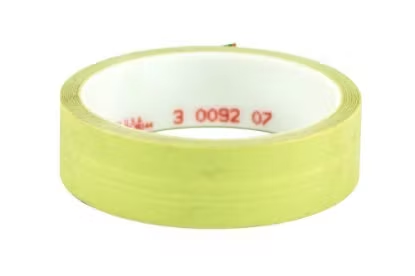

Masking Tape Buying Guide
Masking tape is a versatile adhesive solution commonly used in painting, automotive projects, and general-purpose applications where clean lines and easy removal are essential. Unlike permanent tapes, masking tape is designed to adhere securely to surfaces while allowing for easy removal without leaving residue. Available in multiple widths and lengths, it is perfect for both professional and DIY projects.
Why Choose Masking Tape
Masking tape offers several key benefits:
- Clean Lines for Painting: Ideal for creating sharp edges on walls, vehicles, and equipment.
- Residue-Free Removal: High-quality tapes peel off cleanly, reducing the need for post-project cleanup.
- Surface Protection: Helps protect areas from paint, dust, or overspray.
- Versatility: Works on walls, wood, metal, glass, and other surfaces for both indoor and outdoor projects.
Masking tape is a must-have in workshops, painting jobs, and general maintenance tasks where precision and ease of use are critical.
Best-Selling Models
Top-performing masking tapes are known for their reliable adhesion and ease of removal. Popular options include:
- Standard general-purpose masking tape for indoor and light-duty applications.
- High-temperature masking tape for automotive painting and powder coating.
- Wide masking tape rolls for large surface coverage, ensuring efficient project completion.
Selecting the right masking tape depends on the surface, temperature, and type of paint or material being used.
Shopping Guide
When choosing masking tape, consider these factors:
- Tape Width: Narrower tapes are ideal for intricate lines, while wider tapes cover larger areas quickly.
- Adhesive Strength: Light-duty tapes remove easily, while medium-adhesion tapes hold firmly on textured surfaces.
- Temperature Resistance: For painting or industrial applications, choose a tape that can withstand high heat.
- Surface Compatibility: Check that the tape adheres well to the material you are working with, such as walls, metal, or automotive panels.
FAQ: Masking Tape
Can masking tape be used outdoors?
Yes, certain high-adhesion masking tapes are designed for temporary outdoor use, but exposure to prolonged moisture or sunlight may affect performance.
How do I remove masking tape without damaging surfaces?
Remove the tape slowly at a 45-degree angle, and use a low-heat hairdryer if the adhesive is stubborn.
Is masking tape suitable for automotive painting?
High-temperature masking tapes are ideal for automotive applications, including paint jobs and powder coating.
What width of masking tape should I use for painting?
For precise lines, use narrow tapes (1/2” to 3/4”). For larger areas, wider tapes (1” to 2”) are more efficient.


