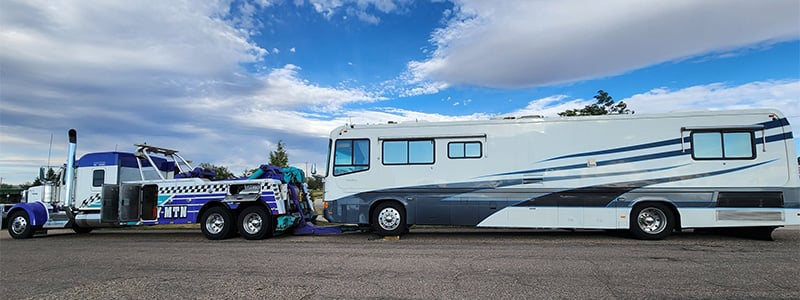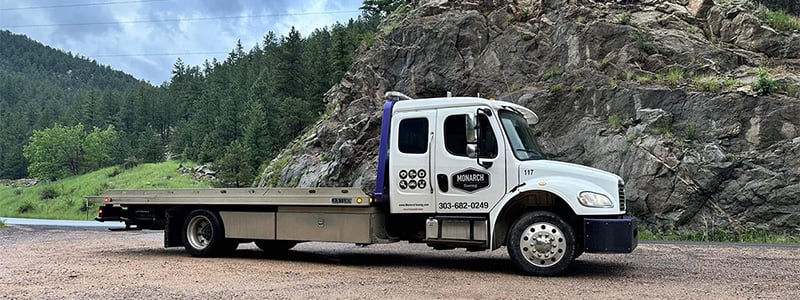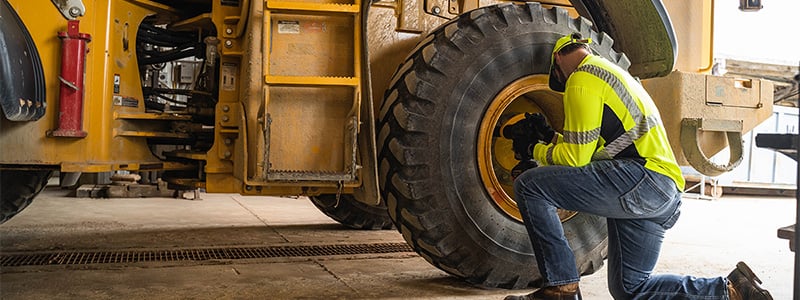
Whether you build the road, drive on the road or help stranded motorists on the side of the road, we want to help you stay safe out there. We want to make sure you go home at the end of your shift. All day and every day, this safety message applies to construction workers, truck drivers, tow operators and anyone else who makes their living out on the highway.
In recognition of June as National Safety Month, the experts at Zip’s AW Direct have compiled a safety checklist companies, drivers and crews can follow to maintain their visibility and safety in high-traffic work zones. We call them Zip's Professional Safety Standards. These best practices incorporate rules, regulations and recommendations from several agencies.
Keeping your team in compliance with accepted safety standards, this guide includes references and links to the DOT, FMCSA, OSHA, ANSI, ISEA and MUTCD. From safety cones and hi-vis apparel to fire extinguishers and first-aid kits, each checkbox explains why certain rules need to be followed and why certain supplies need to be on your truck at all times.
As you know, not everyone behind the wheel follows the ‘Slow Down, Move Over’ mantra, so we encourage all workers to follow these guidelines to increase their visibility and reduce their risk for injury caused by distracted driving. Among other scenarios, this is true for construction zones, vehicle breakdowns and accident scenes.
Each line on our guide also includes staff recommendations to find the necessary equipment, apparel and products to help you comply with these safety expectations at Zips.com. Our partner brands have created portable traffic control products to increase your visibility and help you create a safety buffer zone where one didn’t exist before.
We encourage you to include this checklist during your morning safety meeting or daily vehicle inspection. Do whatever you need to do to include these best practices as part of your daily routine. We have included a link so you can download this list and pin it to the bulletin board in your breakroom or add it to the three-ring binder in each vehicle.
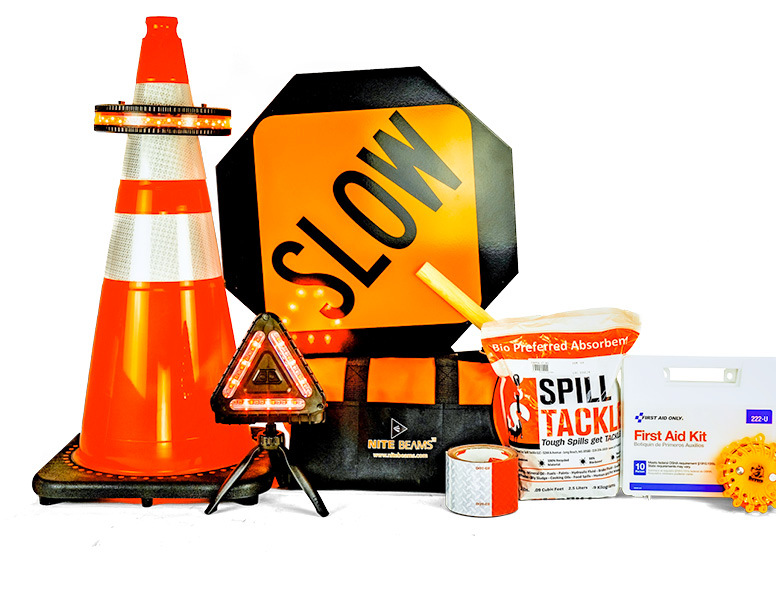
Make sure you’re in compliance with our handy checklist
| Product | Standard or Regulation | Qty. | Sources | Rec. Products | |
|---|---|---|---|---|---|
 |
Traffic Cones |
For high-speed roads or nighttime use, cones must be at least 28" tall and must have two white reflective collars (one 6" and one 4"). | 4-5 | MUTCD 11th Edition, Section 6F.64 Zip’s blog on Understanding the Basics: Cone Types, Sizes and Colors |
SHOP |
|
Warning Signals |
If a commercial vehicle stops on a highway or shoulder, the driver must place warning devices within 10 minutes: One at the traffic side (10 ft), one at 100 ft toward traffic, and one at 100 ft away from traffic. | 3 | ecfr.org 49 CFR § 392.22 & 49 CFR § 393.95(f) |
SHOP Triangles SHOP Flares |
|
Fire Extinguisher |
Keep one in-cab and one in the rear tool box for immediate access to vehicle or cargo fires. | 2 | ecfr.org 49 CFR § 393.95(a) | SHOP |
|
First Aid Kit |
OSHA requires "adequate" first aid but refers to the ANSI/ISEA standard for what constitutes a compliant kit. Class B kits are the professional recommendation. | - | Department of Labor Medical and First Aid Standards | SHOP |
|
Hi-Vis Apparel |
Various rules depending on the roadway. ANSI Class 2 and 3 required based on type of highway and speed of traffic. ANSI Class 3 for 60+ MPH traffic. ANSI Class 2 for 25-50 MPH traffic. | - | Zip’s Blog on ANSI Standards | SHOP |
|
Spill Kits |
This section sets out requirements for the prevention and containment of oil spills during transportation. Operators are expected to have the personnel or equipment to respond to a discharge in the "shortest practicable time". | - | ecfr.org 49 CFR Part 130 Zip’s Blog on Spill Kits and Products |
SHOP |
On the go? Download our printer friendly, interactive PDF here
Conclusion
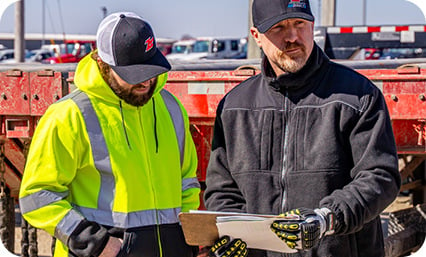
We hope this checklist helps with your daily safety goals and measurables. As we focus on employee safety beyond National Safety Month, here are some key takeaways for actionable compliance for your company throughout the year. Make sure your tow operators, fleet drivers and crew members are actively trained to execute protocols when seconds count.
How can fleets efficiently manage DOT emergency equipment requirements in 2026? Integrate a fleet safety audit checklist into daily pre-trip inspections to ensure immediate compliance with commercial vehicle fire extinguisher requirements for vehicle or cargo fires and to verify that ANSI/ISEA Z308.1-2021 compliant first-aid kits are fully stocked before a truck leaves the yard.
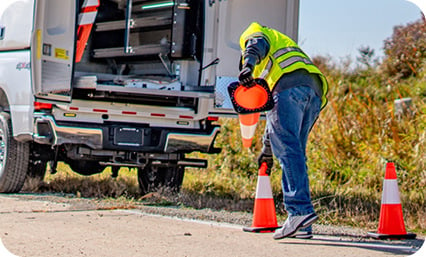
What are the critical execution steps for a high-speed highway work zone setup? Time and spatial awareness dictate OSHA roadside work zone safety. Crews must be drilled to physically deploy FMCSA 392.22 emergency signals within 10 minutes of stopping. Accurately calculating buffer space requirements for roadside work and strictly following Temporary Traffic Control zone standards drastically minimizes the risk of secondary collisions.
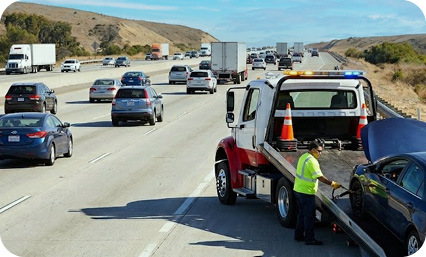
How does traffic speed impact hi-vis apparel requirements and equipment selection? Safety gear must scale with operational risk. While ANSI Class 2 vests are sufficient for 25-50 MPH zones, 60 MPH traffic explicitly requires ANSI Class 3 visibility. Combine speed-appropriate apparel with MUTCD traffic cone standards, ensuring cones utilize the proper reflective collars and actively advocate for the Move Over law to maximize external visibility.
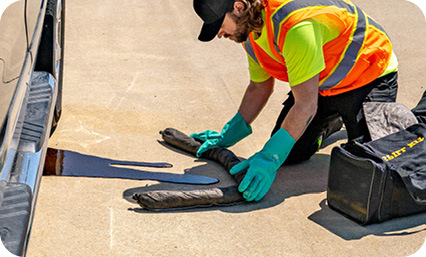
How should operators standardize rapid response protocols? Regulations mandate that operations must contain oil discharges in the shortest practicable time. Standardize your emergency response by downloading our printer-friendly, interactive PDF and keeping a physical copy accessible in every cab and toolbox.