

Battery Testers and Tools
Find the testers and tools you need to service batteries at Zip’s. We carry battery carriers, pliers, tool kits and testers to make your battery service job easier. Shop testers and tools from Quick Cable, Clore Automotive and Associated Equipment.
Refine Your Search
Clear all filters- Brand
-
-
-
-
-
- Type
-

Quick Cable Circuit Tester
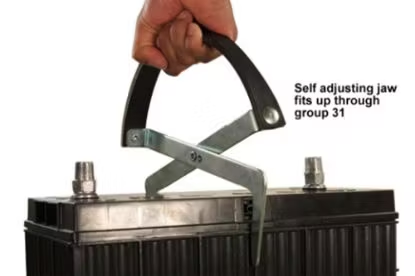
Quick Cable Standard Scissors Battery Carrier

Quick Cable Side Lift Battery Carrier
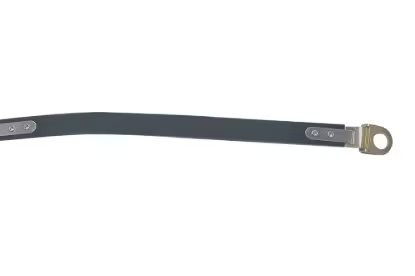
Quick Cable Eye-Loop Strap Battery Carrier
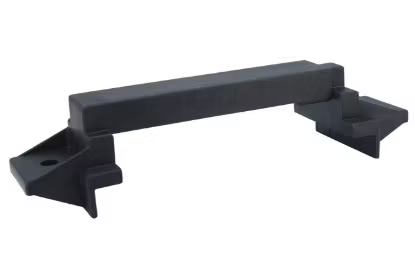
Quick Cable QuickHold Adjustable Battery Hold Down

Quick Cable 9" Angled Battery Pliers
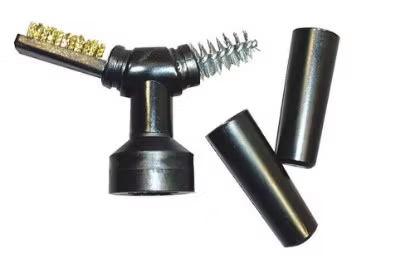
Quick Cable 3-in-1 Brush
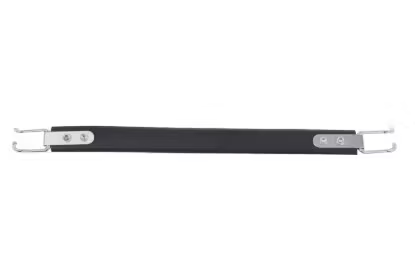
Quick Cable Hook Strap Battery Carrier
Battery Testers and Tools for Professional Diagnostics and Maintenance
Accurate battery testing and maintenance are essential for keeping fleets, work trucks, and service vehicles operating at peak performance. Zip’s offers a complete selection of battery testers and tools designed for technicians, fleet managers, and shop owners who demand reliability and precision. Whether you’re diagnosing weak batteries, testing alternator performance, or safely handling heavy-duty batteries, this collection has the right solution for every job.
Leading manufacturers such as Associated, Quick Cable, Clore Automotive, and Atec provide the industry’s most trusted equipment for testing, lifting, and servicing batteries of all types.
Why Choose Battery Testers and Tools
A dependable battery testing tool helps technicians quickly identify issues before they lead to downtime or costly repairs. Alongside diagnostic equipment, battery tools like carriers, clamps, and pliers ensure safe handling and efficient maintenance in the shop or field.
Here’s why these tools are vital for battery service and diagnostics:
- Accurate Diagnostics: Professional-grade testers provide real-time readings for voltage, load, and cranking amps.
- Comprehensive Testing: Measure battery, starter, and alternator performance to pinpoint electrical system issues.
- Safe Handling: Battery carriers and pliers reduce strain and protect against acid spills or short circuits.
- Durability and Precision: Built to withstand daily shop use and deliver consistent, reliable results.
- Portable Options: Compact, hand-held testers and tools make field diagnostics faster and more efficient.
Whether you’re managing a large commercial fleet or maintaining a few vehicles, investing in quality battery testing tools helps extend battery life and improve service accuracy.
Best-Selling Models
Zip’s carries top-rated diagnostic and handling tools trusted by technicians across the towing, recovery, and automotive service industries. Popular options include:
- Quick Cable Standard Scissors Battery Carrier – Provides a secure grip for lifting and transporting batteries of various sizes, ideal for reducing strain during maintenance.
- Associated Equipment 500A Carbon Pile Battery Load Tester – Offers professional-grade load testing for 6V and 12V batteries, allowing accurate performance evaluation under real-world conditions.
- Quick Cable Side Lift Battery Carrier – A durable and ergonomic solution for handling large batteries safely in tight spaces.
- Atec Hand-held Battery Load, Alternator and Starter Tester – Compact and efficient, this tester provides quick, accurate readings for battery load, alternator output, and starter draw.
Each product is engineered for durability and precision, helping ensure every battery system is tested and maintained to the highest standard.
Shopping Guide: Choosing the Right Battery Testing Equipment
Selecting the correct battery tester or tool depends on your shop’s needs, the types of vehicles you service, and how frequently you perform diagnostics. Consider these factors before making your purchase:
- Testing Range: Ensure your tester supports the correct voltage range (typically 6V, 12V, or 24V systems).
- Display Type: Look for digital readouts for easy interpretation of voltage and current readings.
- Portability: Hand-held testers are ideal for mobile service or field diagnostics, while bench units suit shop environments.
- Load Testing Capability: A carbon pile tester allows for real-world performance checks under simulated loads.
- Tool Quality: Choose carriers and pliers made from corrosion-resistant materials for safe and long-lasting performance.
- Ease of Use: Intuitive interfaces and automatic detection simplify testing for technicians at any experience level.
With a well-equipped set of battery testing and service tools, you can diagnose issues faster, improve service turnaround, and prevent costly electrical failures.
Related Products
Keep your diagnostic setup complete with Battery Service Replacement Parts, including clamps, adapters, and cables to keep your tools performing reliably.
FAQ: Battery Testers and Tools
What does a battery load tester measure?
A load tester measures a battery’s ability to deliver current under simulated operating conditions, providing an accurate indication of its overall health.
Can I use the same tester for both 12V and 24V systems?
Many professional models, such as those from Associated and Atec, support multiple voltage ranges for use on cars, trucks, and heavy-duty equipment.
What’s the difference between a voltmeter and a load tester?
A voltmeter measures static voltage, while a load tester applies a simulated demand to evaluate how the battery performs under stress.
Why use a battery carrier instead of lifting by hand?
Battery carriers like the Quick Cable Standard Scissors Battery Carrier offer a safer, more ergonomic way to move batteries, reducing the risk of injury and acid spills.
How often should I test vehicle batteries in a fleet?
Fleet vehicles should undergo battery testing at least every three months, or anytime there are signs of slow cranking, dim lights, or erratic electrical behavior.


